Officer
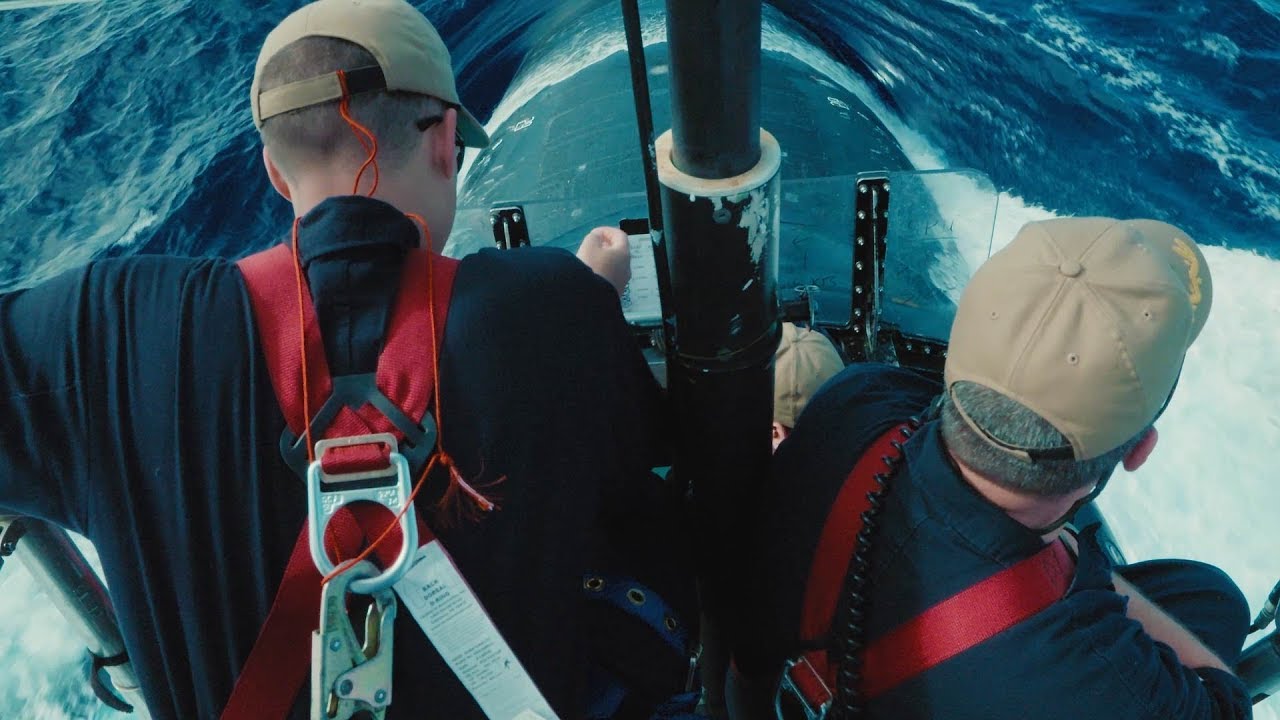
The USS Tucson (SSN 770), a Los Angeles Class nuclear submarine, operates in the North Arabian Gulf in support of UN resolutions.
Nuclear Power
Job Overview:
The U.S. Navy is recognized around the world for its exacting standards in science — particularly in the nuclear field. If you think you have what it takes to lead a team with billions of dollars worth of equipment at your command, accelerate your life as a nuclear-trained Officer.
Pay:
Because of its level of specialization, Officers in the nuclear field are not only rewarded with excellent salaries, they also receive generous bonuses such as a $15,000 selection bonus.
Job Description:
You will learn the ins and outs of nuclear propulsion plants, the heart of over 80 submarines and aircraft carriers in the U.S. Navy. You will apply this detailed knowledge while supervising top-notch Sailors as they enable submarines to gather covert intelligence and aircraft carriers to launch round after round of sorties. Officer candidates for the Navy nuclear power program are carefully selected based on a high aptitude for math and science and their abilities to handle responsibility and to work well under pressure.
What Will You Do?
If selected as an Officer in the Navy nuclear power field, you will have joined a world leader in applied sciences. The Navy excels in nuclear engineering and nuclear power plant operation with the world’s most comprehensive technical training in nuclear energy and nuclear propulsion. You may find yourself approving technical designs for new nuclear components, observing propulsion plant performance and crew performance, or even assuming watch in the control room of a $2 billion warship. As a Nuclear Power Officer, some of your responsibilities may include:
- Maintain and operate sophisticated nuclear propulsion plants and modern weapons and sensor systems on ships or submarines.
- Direct projects to improve nuclear power plants in ships or submarines.
- Assist high-level officials in creating policies for developing and using nuclear technology.
- Oversee nuclear engineering operations and navigational duties on ships or submarines.
- Conduct advanced research and development in concepts, materials, design, and operation of nuclear propulsion plants.
- Develop equipment, procedures, and specifications for nuclear propulsion plants.
- Monitor reactor safety and radiological controls.
Skills and Training
With its advanced courses, state-of-the-art facilities, and exceptional instructors, the Navy nuclear power program has earned a reputation as one of the finest engineering programs in the world. Training for three different Nuclear Power Officer positions is described below:
Nuclear-Trained Naval Officers
Two and a half years prior to college graduation, future Nuclear Power Officers can enter the Nuclear Propulsion Officer Candidate Program (NUPOC). This program offers you a monthly stipend from $2,990 to $5,000 per month for up to 30 months depending on location, a $15,000 selection bonus, and an additional $2,000 bonus upon completing nuclear propulsion training. After completion of the 12-week course at Officer Candidate School, Nuclear Power Officers then begin training at the Naval Nuclear Power Training Command (NNPTC) in Charleston, South Carolina. This 24-week course helps students understand the complex nature of nuclear propulsion through a broad background on theory and operations mechanics. Once you’ve successfully completed NNPTC, you’ll begin training at a Nuclear Power Training Unit for real-life work on an actual operating reactor. You’ll work at all junior watch stations and eventually assume the role of Engineering Officer of the Watch in charge of the entire plant. Submarine Nuclear-Trained Officers attend Submarine Basic Course, a 12-week course that will familiarize you with submarine safety and operations and all of the necessary aspects of submarine life as an Officer. Surface ship Nuclear Power Officers will first attend Officer Candidate School, complete a sea tour, and attend Surface Warfare Officer School prior to receiving nuclear power training.
Nuclear Power School Instructors
If you’re pursuing or possess a bachelor’s or master’s degree in a technical field, consider this career. If you’re in college and not quite sure what the future holds, consider a teaching opportunity in one of the most prestigious, up-and-coming fields today. The Navy Nuclear Power Instructor program offers you from $2,990 to over $5,000 per month for up to 30 months to help you complete college and provides a guaranteed position as a Nuclear Power School (NPS) Instructor. You’ll attend a five-week course at the Officer Development School in Newport, Rhode Island. Nuclear Power Instructors are responsible for training future Nuclear Propulsion Officers and Nuclear Field Enlisted Personnel in mathematics and physics, electrical engineering, heat transfer and fluid flow, chemistry, radiological controls, and reactor plant engineering at the Naval Nuclear Power Training Command in Charleston, South Carolina.
Naval Reactors Engineers
While finishing college as a future Naval Reactors Engineer, you will be paid from $2,990 to $5,000 per month for up to 12 months. Following graduation, you will attend a five-week course at the Officer Development School in Newport, Rhode Island. The Naval Reactors Engineer training program offers new Naval Reactors Engineers a Postgraduate education in nuclear engineering at the Bettis Atomic Power Laboratory in Pittsburgh, Pennsylvania. After completion of this training, Naval Reactors Engineers are assigned five-year positions at Naval Reactors headquarters in Washington, D.C., approving, confirming, and planning the design, operation, and maintenance of over 100 nuclear reactors.
Special Pay/Bonuses
Because of its level of specialization, Officers in the nuclear field are not only rewarded with excellent salaries, they also receive generous bonuses and unique benefits not widely available anywhere else.
Candidates attending college may enter the Nuclear Propulsion Officer Candidate Program (NUPOC) up to 30 months prior to graduation. This program awards students a $15,000 selection bonus and a salary (with all military benefits) of $2,990 to $5,000 a month, depending upon location while in college. Students aren’t required to wear a uniform or attend military training during school. You study hard in school to maintain the required grade point average — then, after graduation, enter Officer Candidate School to gain a commission as a Navy Officer, prior to starting the Navy Nuclear Propulsion Officer Training program.
If you’re a qualified Nuclear Propulsion Officer candidate, the Navy offers a two-day VIP trip to give you a chance to tour various Navy warships and submarines. The Navy will fly you and other prospective Officers to a Naval base so you can interact with Navy Officers, tour the flight deck of an aircraft carrier, walk through the torpedo room of a Los Angeles-class submarine, and ask questions about Navy life.
Career Outlook
Nuclear Officers gain valuable lifelong experiences, including nuclear training and leadership roles that may even include being in command of one of the world’s most sophisticated submarines or being in charge of the entire propulsion plant of the world’s largest aircraft carrier. You may be responsible for designing and maintaining the safe operation of the most advanced reactor plants in the world or ensuring that a ship’s nuclear systems are running smoothly so that it is mission-ready. The highly specialized skills you will acquire as a Nuclear Officer in the Navy will make you an extremely valuable asset in the elite nuclear community.
LT Christopher Hover